Moussem, these religious and festive gatherings deeply rooted in Moroccan culture, occupy a special place in the social life of the inhabitants of the Marrakech-Safi region. Whether held in the heart of the mountains, in a rural village, or near major cities, each of them celebrates the memory of a saint, a spiritual figure, or a protector venerated by generations.
These annual events are not limited to prayers and rituals: they embody a true time of sharing that blends spirituality, traditional songs, fantasia, crafts, and local markets. The Moussem thus becomes a crossroads of exchange, knowledge transfer, and conviviality.
A mosaic of celebrations across the region

Among the best known, the Moussem Sidi Ahmed Ben Mohammed in Zaouiate Moulay Brahim (Tahnaout) attracts crowds every February who come to honor the memory of the saint through prayers and festivities.
In the same period, the Moussem Moulay Brahim in Daouar Zkara (Chichaoua) brings together inhabitants around spiritual rituals and cultural celebrations, marked by local music and traditions.
In spring, other places come alive: the Moussem Sidi Lahsen or Hmad to Daouar Tissira and the Moussem Sidi Tassaft in Daouar Agadir feature songs, dances and community gatherings. In Imlil, the Moussem Sidi Chamhrouche recalls the strong link between spirituality, nature and local crafts.
Summer sees a multitude of celebrations flourish. Moussem Setti Fattma (Tleta Nyacoub), the Moussem Zaouit Oum Rbat at the foot of Jbel Toubkal, or the Moussem dedicated to Sidi Abdallah Sarrakh, Sidi Ahmed Ou Ali, Sidi Ben Daoud and Sidi Lahsen In the region's douars and communes, residents and visitors gather around the memory of the saints. These events combine spirituality, music, fantasia and markets, bringing intangible heritage to life to the rhythm of the seasons.
In late summer and early fall, other spiritual figures are honored: Sid Ben Daouad in Daouar El Bourka, Sidi Lahcen in Aït Hadoufe Youssef, or even Sidi Abdellah Ghiate in Aït Ourir. These festivals recall the essential role of the Moussem in social cohesion and the continuity of traditions.
Traditions included in intangible heritage

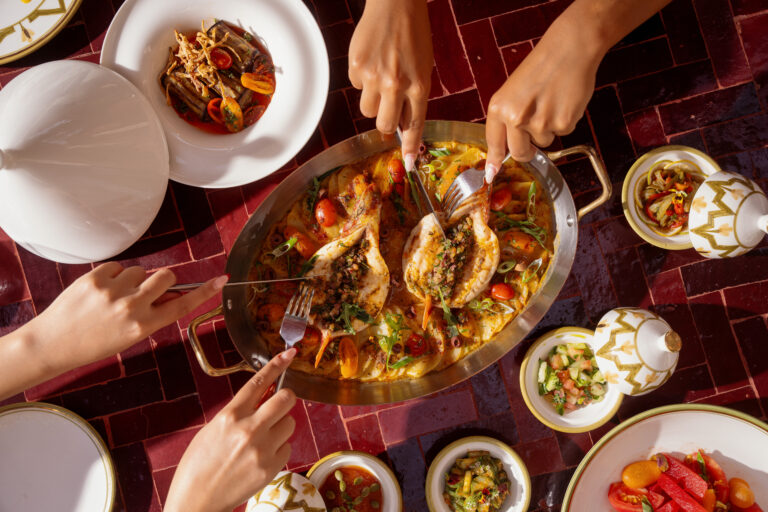
Beyond their religious dimension, Moussem are true expressions of Morocco's intangible cultural heritage. They constitute living spaces where know-how (crafts, gastronomy, fantasia), spiritual practices and unique artistic expressions are perpetuated.
UNESCO has also recognized this wealth by including certain emblematic Moussems, such as that of Tan-Tan, on the list of intangible cultural heritage of humanityEven if each local Moussem is not mentioned individually, all participate in this same common heritage, which illustrates the diversity and vitality of Moroccan traditions.
A living heritage to preserve
The Marrakech-Safi Moussem are not just commemorations: they represent a collective memory, a spiritual anchor, and a moment of celebration where residents, families, pilgrims, and visitors meet. They bear witness to an authentic Morocco, where intangible heritage continues to express itself and reinvent itself, generation after generation.